






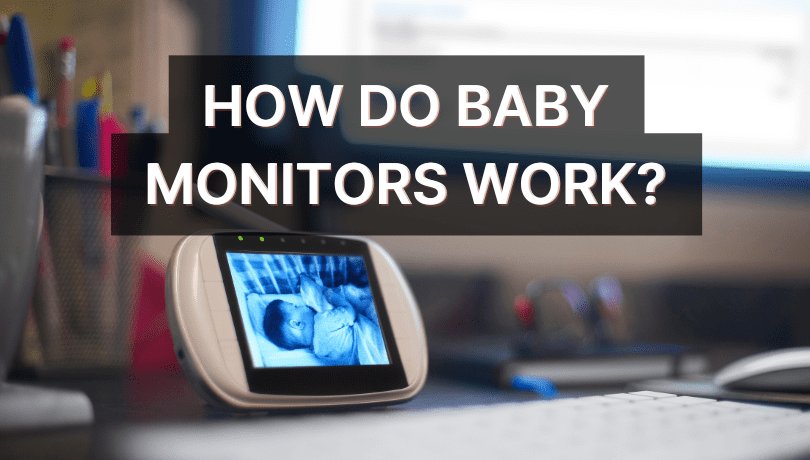
Baby monitors provide peace of mind for parents. They work by capturing audio and video of a baby in real-time and transmitting it to a receiver. The device uses wireless technology to ensure parents can monitor their baby from a distance. How do baby monitors work? Let’s delve into the fascinating technology behind these essential parenting tools.

How Do Baby Monitors Work: A Comprehensive Guide
The Basics of Baby Monitors
Baby monitors have become an essential tool for parents, offering peace of mind by allowing them to keep an ear and eye on their little ones while they are sleeping or playing in another room. But have you ever wondered how these magical devices actually work? Let’s dive into the fascinating world of baby monitors and uncover the technology behind them.
Types of Baby Monitors
There are different types of baby monitors available in the market, each offering unique features to cater to the diverse needs of parents. The two main types are audio baby monitors and video baby monitors.
Audio Baby Monitors
Audio baby monitors are the more traditional type, providing parents with the ability to listen to their baby remotely. These monitors consist of a transmitter (placed in the baby’s room) and a receiver (carried by the parent). When the baby makes a sound, the transmitter picks it up and sends it to the receiver, allowing parents to hear if their baby is crying or in need of attention.
Video Baby Monitors
Video baby monitors take monitoring to the next level by providing a live video feed in addition to audio. This enables parents to not only hear but also see their baby, offering a more comprehensive way to ensure their safety and well-being.
Components of a Baby Monitor
Regardless of the type, all baby monitors consist of essential components that work together to transmit audio and video signals from the baby’s room to the parent unit.
1. Camera
In video baby monitors, the camera is the most crucial component. It is placed in the baby’s room to capture live video footage, which is then transmitted to the parent unit. Modern cameras come equipped with features such as night vision and pan-tilt-zoom functionality for enhanced monitoring capabilities.
2. Microphone
The microphone in a baby monitor is responsible for capturing the sounds in the baby’s room. It picks up noises like crying, gurgling, or even soft breathing and transmits them to the parent unit, allowing parents to monitor their baby’s activities audibly.
3. Parent Unit
The parent unit is the device carried by the parents to receive the audio and video feed from the baby’s room. It typically consists of a display screen for video monitors or a speaker for audio monitors, enabling parents to see or hear their baby in real-time.
4. Transmitter
The transmitter is placed in the baby’s room and acts as the hub for collecting audio and video signals. It then transmits these signals wirelessly to the parent unit, ensuring that parents stay connected with their baby even when they are in a different room.
Wireless Transmission Technology
One of the key aspects of how baby monitors work is their wireless transmission technology, which enables seamless communication between the baby’s room and the parent unit. Most modern baby monitors use DECT (Digital Enhanced Cordless Telecommunications) or Wi-Fi technology for transmission.
DECT Technology
DECT technology operates on a specific frequency band, providing secure and interference-free communication between the baby monitor units. It ensures high-quality audio and video transmission without the risk of signal interference from other wireless devices in the house.
Wi-Fi Technology
Wi-Fi-enabled baby monitors offer the convenience of accessing the live video feed through a smartphone or tablet. These monitors connect to the home’s Wi-Fi network, allowing parents to monitor their baby remotely from anywhere with an internet connection.
Enhanced Features of Baby Monitors
In addition to the basic functionalities, modern baby monitors come with a range of enhanced features to make parenting easier and more convenient.
1. Two-Way Communication
Some baby monitors are equipped with two-way communication, enabling parents to talk to their baby remotely. This feature can help soothe the baby by hearing the parent’s voice, even when they are not physically present in the room.
2. Room Temperature Monitoring
Monitoring the room temperature is crucial for ensuring a comfortable sleep environment for the baby. Many baby monitors now include sensors to track the temperature and alert parents if it falls outside the set range.
3. Lullabies and Night Lights
To help babies drift off to sleep, some baby monitors offer built-in lullabies and night lights that can be controlled remotely from the parent unit. These features provide a calming environment for the baby and promote better sleep.
In conclusion, baby monitors have revolutionized the way parents keep an eye on their little ones, offering convenience, peace of mind, and safety. Understanding how baby monitors work, from the basic components to the wireless transmission technology, can help parents make informed decisions when choosing the right monitor for their needs. With the continuous advancements in technology, baby monitors continue to evolve, providing parents with innovative features to simplify parenting and ensure the well-being of their precious little ones.
WiFi vs. Non-WiFi Baby Monitor – Don't make a mistake!
Frequently Asked Questions
How do baby monitors transmit audio and video signals?
Baby monitors use radio waves to transmit audio and video signals from the camera in the baby’s room to the parent unit. The camera captures sounds and images and sends them wirelessly to the monitor, allowing parents to see and hear their baby from a different room.
What is the role of the receiver unit in a baby monitor system?
The receiver unit in a baby monitor system picks up the signals sent by the camera unit in the baby’s room. It displays the video feed and plays the audio, enabling parents to monitor their baby remotely. Some modern baby monitors also come with features such as temperature sensors, two-way communication, and night vision.
How does the two-way communication feature work in baby monitors?
The two-way communication feature in baby monitors allows parents to talk to their baby through the monitor’s parent unit. When activated, the parent can speak into the monitor, and the sound is transmitted to the camera unit in the baby’s room. This feature is useful for soothing the baby with a comforting voice without physically being in the room.
Final Thoughts
In conclusion, baby monitors operate by using a camera and microphone in the baby’s room that transmit audio and video signals to a receiver unit. The receiver unit then displays these signals, allowing parents to monitor their baby remotely. Baby monitors work by establishing a secure connection between the camera and receiver, providing real-time monitoring. Overall, understanding how baby monitors work can give parents peace of mind knowing they can keep an eye on their baby at all times.